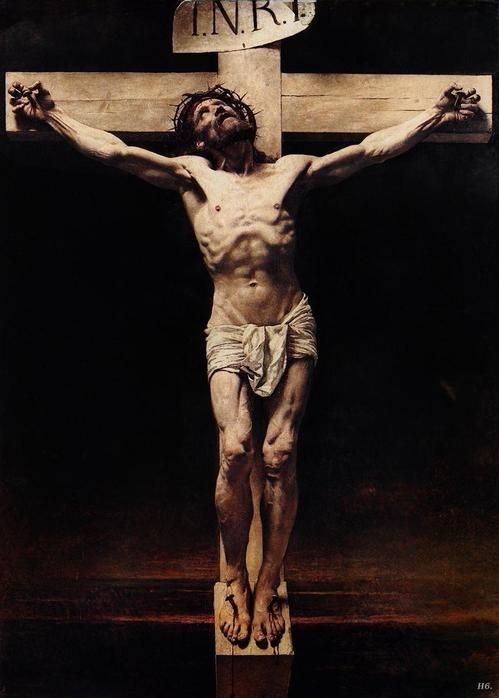
“What then? Only that in every way, whether in pretense or in truth, Christ is proclaimed; and in this I rejoice. Yes, and I will rejoice….
— Philippians 1:18
Traditions, ceremonies, and rituals of any type have motivations and effects far beyond what many of us think about today. They are intertwined in the nature of our humanity as social creatures, as well as in our common need to worship someone or something.
It should not come as any surprise that all holidays, especially those with a strong religious sentiment, are highly secularized and commercialized. To say so has become a cliche. But I’ll try to add a little more depth to it.
This is perhaps true of Christmas most of all. If you just look at your emojis offered in social media you find this effect. You will see Santa Claus, reindeer, and the giving of many presents. It is more tinsel in trees than shepherds by night and angels singing above a manger in the stable.
With most holidays, again the religious ones especially, there are also pagan overtones in history past.
Even without the secularization or pagan corruptions of “the world”, there are adulterations of the holidays within religious communities themselves. Celebration of Easter and Christmas in the early and Middle Ages is a prime example of religious symbolism in ceremony becoming idolatry as icons become the object of worshiping in themselves. Magical and mystical meanings become a spiritual reality that degrades the essence of why Christ came as God in the flesh. As it was corrupted in the Jewish cultus of the Old Testament, so in Christian Orthodoxy with “the smells and the bells”.
We need to remember too that our American perspective doesn’t represent that of the whole world. There are so many rituals and ceremonies that have become traditions throughout a multitude of cultures. But as with us, these are most often collective celebrations of a community and their families rather than the God who creates them.
But we should not assume that because our rituals weave us together all the fabric created is good for clothing us or honorable in God’s eyes. There is much idolatry in the world. Idolatry is the corruption of true worship and it is the devil’s work to do this wherever and whenever he can.
The idolatry we magnify most is the idolatry of self, of ourselves, because we are the highest form of creation and regale ourselves with stories and ceremonies that celebrate our power and progress, however self delusional that may be. (Romans 1.18-23). This is no less true in our technology which declares knowledge divine and absolute kn
To sort these things out in my own life I follow a simple plan. I believe the Scriptures, the Bible, is the word of God, the word of God to me and those who believe in him, therefore I use this as my guide with any traditions, ceremonies, or rituals that draw me in community with others.
“All Scripture is inspired by God and profitable for teaching, for reproof, for correction, for training in righteousness; so that the man of God may be adequate, equipped for every good work.”
— 2 Timothy 3:16-17
I don’t see the Bible as prohibiting the celebration of Christ’s birth, whether you believe it was in December or some other time of year.
I don’t find a prohibition either implied or directly stated in Scripture.
The fact that it can be made into an idolatrous, secular occasion does not mean that you cannot celebrate Christmas, his birth, with a sincere heart devotion and worship of his sacrifice and humility. Nor does the fact that it has been paganized destroy historical truth: God became a man to dwell among us.
However, it is also clear that no such holiday is mandated in Scripture.
I do see a danger in relegating our celebration of his incarnation, of God coming to dwell among us in human flesh, to a mere few days of the year when it should be something (Someone) we appreciate daily as we worship Him and live in obedience to him as our Lord.
The humanity of Christ is everything to us and we should focus on appreciating him for who he is at all times.
I do like Christmas in this respect, in any emphasis and attention it gives to him for those with eyes and hearts to believe.
“Therefore, since the children share in flesh and blood, He Himself likewise also partook of the same, that through death He might render powerless him who had the power of death, that is, the devil, and might free those who through fear of death were subject to slavery all their lives. For assuredly He does not give help to angels, but He gives help to the descendant of Abraham. Therefore, He had to be made like His brethren in all things, so that He might become a merciful and faithful high priest in things pertaining to God, to make propitiation for the sins of the people. For since He Himself was tempted in that which He has suffered, He is able to come to the aid of those who are tempted.”
— Hebrews 2:14-18

 Crucified Hearts
Leave a comment