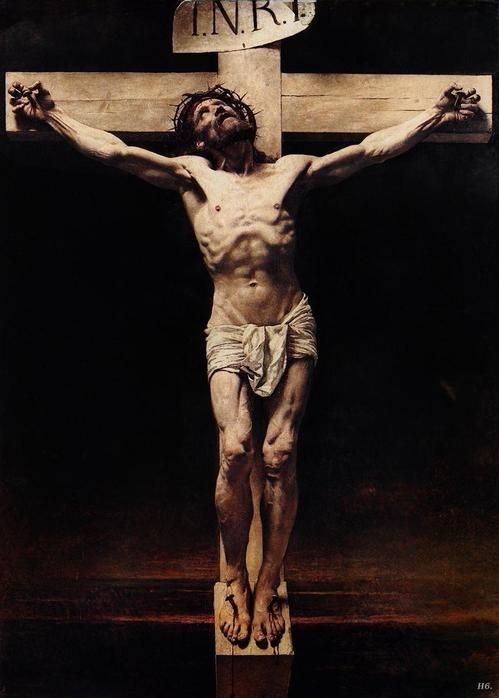
Why is it that the Bible does not give us a day to celebrate the resurrection of Christ? There is no command to celebrate or to set aside such a day. There is no historical precedent for it in the New Testament writings after the resurrection of Christ. You have to go beyond the New Testament era to find that.
Don’t misunderstand me. I’m not saying that we should do that, that is, think about the death and resurrection of Christ at a special time. But are we doing so In a way that hinders us from understanding it’s true meaning?
If you do a search online concerning the resurrection you will find a great number of references or books that take up the question about the historical fact of the resurrection. The great question everyone wrestles with and seems to dominate is whether or not Christ was, in fact, truly raised from the dead.
Whole books, many books, have been written as apologies of the Christian faith in defending the doctrine of his resurrection. I’m not saying this should not be. Paul takes up this idea and defends the resurrection of Christ from the dead in 1st Corinthians chapter 15. That would be a very good study this time of year.
But that in itself is not a celebration of the resurrection of Christ. It is defending the historical reality.
What I’m asking is this: How does God want us to celebrate the resurrection of Christ from the dead? Isn’t there some scripture on this? We know that he has not declared a specific day to do it or even a specific weekend or time of the year. Does he want us to celebrate the resurrection at all?
This is an important question for the Christian faith. To get the death and resurrection of Christ wrong is to get everything wrong about who God is, about what he has done in, through, and as his Son. If we are wrong about the nature and meaning of his death and resurrection we are wrong about everything else in the Christian faith.
And sometimes getting it wrong means simply putting the emphasis where it isn’t meant to be. It means a misdirection, taking away of the true object of faith and replacing it with something else that does not suffice.
What we do find in Scripture is that the resurrection of Christ is closely linked to baptism by immersion, that is, by the new believer being taken under the water and brought back out as an immersive experience of death and resurrection in union with Jesus Christ.
Do we change our teaching, even the significance of the resurrection when we take away this link, this emphasis on the union of the believer with Christ in his death and resurrection as an existential reality NOW, when we replace it with an annual remembrance of the resurrection of Jesus that is celebrated as a religious and even secular event, apart from the living witness of a new life before our very eyes?
Is it any wonder people disbelieve the truth of resurrection, the raising of the dead, when they can readily claim they have never seen it happen. Have we pointed them in the right direction?
Are they truly associating the resurrection of Christ with the new creation of life in the believer who was once dead in trespasses and sins? What are we declaring about the resurrection?
There’s a danger resurrection is seen as something that only happened then (If it ever happened at all, as some say) and that this resurrection into a new and justified life before God and others is not here and now. It becomes only something we look back on rather than something we behold in the present. Or it becomes the promise of something we will have at the last resurrection in Christ raises the dead rather than him raising those who have been dead in their trespasses and sins.
Resurrection of the body is pointless and nonsensical if there has not been a rebirth in the Spirit. You simply would have a body without life. The emphasis of Scripture on the resurrection of the dead is a passing from death in sin to a life in Christ, in the very here and now.
If we proclaim a living Christ where is he to be seen? Scripture declares he is to be seen in the believer’s life.
Therefore if anyone is in Christ, he is a new creature; the old things passed away; behold, new things have come.
— 2 Corinthians 5:17
…having been buried with Him in baptism, in which you were also raised up with Him through faith in the working of God, who raised Him from the dead.
— Colossians 2:12
“For if we have become united with Him in the likeness of His death, certainly we shall also be in the likeness of His resurrection, knowing this, that our old self was crucified with Him, in order that our body of sin might be done away with, so that we would no longer be slaves to sin; for he who has died is freed from sin.
Now if we have died with Christ, we believe that we shall also live with Him, knowing that Christ, having been raised from the dead, is never to die again; death no longer is master over Him. For the death that He died, He died to sin once for all; but the life that He lives, He lives to God. Even so consider yourselves to be dead to sin, but alive to God in Christ Jesus.
Therefore do not let sin reign in your mortal body so that you obey its lusts, and do not go on presenting the members of your body to sin as instruments of unrighteousness; but present yourselves to God as those alive from the dead, and your members as instruments of righteousness to God.
— Romans 6:5-13
Easter: What does it really mean?

About Me
A Christian, thinking, vlogging, and writing online. I live elsewhere as well. I follow the theology of the cross in the faith and practice of the Seventh-day Adventist Church. Formerly a pastor in Europe and America, now living semi-retired in Kentucky (U.S.), driving for the Amish and in-home carer.
 Crucified Hearts
Leave a comment