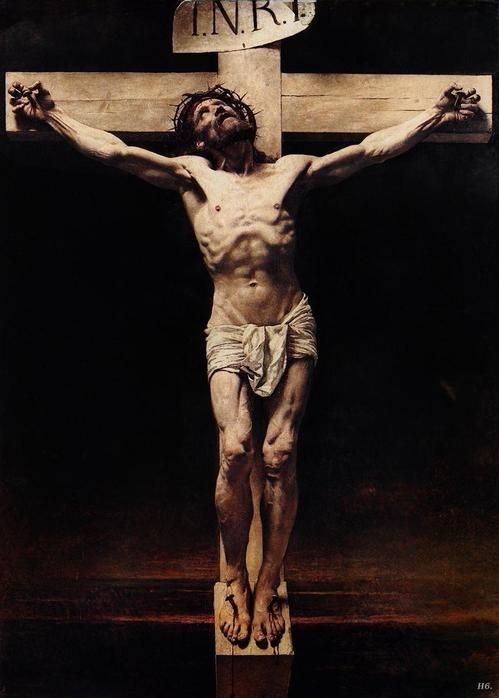
[Reposted from my Facebook page, written earlier today.]
Do you know the meaning, significance, and necessity of “imputed” righteousness? (Romans 4:8,11,22-24, 5:23).
The word appears in the King James Version of these texts. More modern Bible versions have updated the term(s) so you may not be familiar with them. But it is still used in theology to describe a specific act of God in justifying the sinner, the core of the gospel, the heart of the gospel, without which, it lies dead.
“For what does the Scripture say? “Abraham believed God, and it was credited [imputed] to him as righteousness.” Now to the one who works, his wage is not credited as a favor, but as what is due. But to the one who does not work, but believes in Him who justifies the ungodly, his faith is credited [imputed] as righteousness…”
— Romans 4:3-5
“…Blessed is the man to whom the Lord will not impute [account] sin.”
— Romans 4:8 KJV / cf. Ps. 32:1,2
This word and these passages also lie at the heart of the disagreement over the truth about justification (righteousness by faith alone) between Protestantism and Catholicism. I dare say a majority of Protestants today hold, either unwittingly or rebelliously, the position of Rome on justification, which is in fact a position of eternal loss. A significant number within my own church hold this false doctrine, disguising it under a profession of godliness called Last Generation Theology. Others align themselves with them under the misnomer of “historical Adventism”, as if the pioneers of our church taught a false gospel of salvation by works.
Why does it matter so much? Isn’t it just a windy upset in the teacup of theology? How could, as I suggest, so much depend upon something that seems either difficult to grasp or simply insignificant?
The apostle Paul puts it this way:
“But though we, or an angel from heaven, preach any other gospel unto you than that which we have preached unto you, let him be accursed. As we said before, so say I now again, If any man preach any other gospel unto you than that ye have received, let him be accursed.”
— Galatians 1:8-9
No amount of sincerity can release us from the curse of the sinner who attempts to change the way in which God justifies us.
Righteousness by faith alone, the justification of the ungodly by the grace of God through faith in the “imputed” righteousness of Christ, is the very heart of God’s saving act in the gospel.
Implied within it is ALL that Christ did in perfect obedience to the law of God and dying for our sins, so that his obedience could be imputed to us who believe in him.
The whole life and teachings of Jesus are staked upon the truth of justification by faith alone.
It has been this way from the beginning, before the creation of the world, when the Father and the Son and the Holy Spirit, made a covenant bond for the saving of the sinful humanity to come. In that Divine council of heaven the doctrine of justification by grace through faith was created and at its heart is the imputed righteousness of Christ alone.
What wonder then that there is so great confusion today in all of the churches between what God does in justification and what we accomplish in sanctification.
A great many, I would dare say a majority, of Christians today believe that their obedience to God’s law of love will merit God’s favor in the judgment and secure for them the salvation they long for. You hear the theology in their boasting of all they have overcome and all they have accomplished, by grace of course, in their efforts of obedience. And they obviously have the pictures to prove it.
The very sparseness of the discussion about imputed righteousness among Christians points us in this direction. The same can be said for the rarity of preaching on this subject. Humorous anecdotes and fascinating stories replace the expository preaching of the Word of God. The itching ears of a bored Christian community are scratched by increasingly more entertaining displays of imagined talents and presumptive spiritual gifts. Stage performance and the praise it receives is called worship. The infusion of energetic gestations and swaying hips is proclaimed to be manifestations of the Spirit. How can we not all be blessed?
What you do not see in our large and small meetings, what you do not hear, are the sites and sounds of repentance and confession of sin from sinners who see how they stand before a holy God. Where are the tears? Where are the cries? Where is the Pentecost of repentance and confession among those who have a searing need for relief of the convictions of sin?
And when there is some small measure of conviction, how can it be so quickly lost between the pew and the potluck table? We no longer wait to even enter the foyer after service before we discuss our favorite recipes, lawn mower repairs, and problems with the insurance adjuster. And this on the Sabbath!
How common worship has become! Could it have anything to do with misunderstanding the gospel, with refusing to give up our imagined right to boast in some way, at some time, of our achievements for God?
We will not be able to plead ignorance in the judgment for a truth that has been so clearly revealed, so urgently explained, yet widely ignored throughout the history of the church. Ignorance of the gospel, as in ignorance of the law, does not remove us from the responsibility of knowing it and the consequences of ignoring it.
It is true that the essence of the gospel is in simply believing on Jesus’ name, that in the person of Jesus all true theology meets and has its meaning. We may start the Christian walk by simply confessing our faith in Christ from a sincere heart with very little knowledge of how the bread of life is made.
HOWEVER, a professed faith that does not continue to seek understanding becomes presumption and loses its hold upon God. Very many have failed to progress in a Christian life, even worse, have become Christians in name only, through a willing ignorance of God’s saving acts in Christ. They reveal their unwillingness to live in true relationship to him, a relationship in which the bond is defined by God, not by themselves.
The gospel is the essence of simplicity, yet often very difficult because it allows no variance for pride and self-sufficiency in living before God. Experientially, justification by faith means the death of self in union with Christ in his death to sin (Roman 6). Expecting to be a Christian while not taking up this cross daily is a delusion of discipleship, not the exercise of it. (Luke 9:23-26). It is to come under the curse of God rather than his blessing.
If you have lost your way in understanding the gospel and living by it, there is only one way forward and that is through a diligent search of the Scriptures, allowing God to reframe your faith, your thinking, and your living by his word. This is the transformation and reformation so sorely needed in the church today.
The Scriptures clearly define our condition under the law, the righteousness it demands, and the righteousness that can only be ours, not through obedience to the law, but through the obedience of Christ to that law that is imputed to us, that is credited or reckoned to us, when we put our faith in his death for our sins.
(Romans 3:10-31) See at the end.
Righteousness is not a wage to be earned but a gift that is given. Justification is not a making righteous, not infusing us with righteousness, but a declaration of righteousness through the advocacy of Jesus Christ in our behalf.
Justification is our title to heaven; sanctification is our fitness for it. We must never confuse the two.
Justification accounts us as perfect before the law of God when we, in fact, are still far from morally perfect. The work of sanctification, that is, growing in the likeness of Christ, is the work of a lifetime and will never end as long as life shall last. And no amount of moral achievement will merit us standing as sinless before the law of God.
That is why the gospel takes away our proud boasting before God. What we may boast in is not our efforts of obedience to the law or any achievement in it (which certainly must exist), but are boast is in the cross of Christ , in his work for us that was already accomplished 2,000 years ago at Calvary. (Rom. 4:2; 15:7; 1 Cor 1:29-31; Gal. 6:14).
Even the sanctification, the obedience to the law of love, that God works in us through the power of His Holy Spirit, through his grace and our efforts, does not justify us in his eyes. These works of love can out atone for sins committed nor make us so pure that our corrupt humanity no longer appears in his eyes.
No good works in worship or service ascend to God in spotless purity. Our prayer, our praise, our sacrifices are only acceptable to God when mingled with the merits of Christ’s blood because all of our good works still pass through the corrupt channel of humanity. The very best of the human being can do is still so morally defiled by human nature that it is repudiated by a holy God.
Says Ellen White:
“Oh, that all may see that everything in obedience, in penitence, in praise and thanksgiving, must be placed upon the glowing fire of the righteousness of Christ. The fragrance of this righteousness ascends like a cloud around the mercy seat.” 1SM 344.3
It is for want of this that the church lacks power and wisdom, even thkugh church the so desperately seeks them, having forgotten that her power is in her weakness and her wisdom is in her foolishness, in the weakness and foolishness of God that is declared in the cross of Christ.
I’ll leave this argument of the gospel with these verses from 1st Corinthians as a witness to the truth and a testimony against all who corrupt the gospel with the supposed merits of their good works.
“For the word of the cross is foolishness to those who are perishing, but to us who are being saved it is the power of God. For it is written,
“I will destroy the wisdom of the wise,
And the cleverness of the clever I will set aside.”
Where is the wise man? Where is the scribe? Where is the debater of this age? Has not God made foolish the wisdom of the world? For since in the wisdom of God the world through its wisdom did not come to know God, God was well-pleased through the foolishness of the message preached to save those who believe.
For indeed Jews ask for signs and Greeks search for wisdom; but we preach Christ crucified, to Jews a stumbling block and to Gentiles foolishness, but to those who are the called, both Jews and Greeks, Christ the power of God and the wisdom of God. Because the foolishness of God is wiser than men, and the weakness of God is stronger than men.
For consider your calling, brethren, that there were not many wise according to the flesh, not many mighty, not many noble; but God has chosen the foolish things of the world to shame the wise, and God has chosen the weak things of the world to shame the things which are strong, and the base things of the world and the despised God has chosen, the things that are not, so that He may nullify the things that are, so that no man may boast before God.
But by His doing you are in Christ Jesus, who became to us wisdom from God, and righteousness and sanctification, and redemption, so that, just as it is written, “Let him who boasts, boast in the Lord.”
— 1 Corinthians 1:18-31 NASB
Update: I forgot to add the promised scriptures!
Here it is, the law and gospel in all of its glory in Christ:
Rom. 3:10-31 NASB
“…as it is written,
“There is none righteous, not even one;
There is none who understands,
There is none who seeks for God;
All have turned aside, together they have become useless;
There is none who does good,
There is not even one.”
“Their throat is an open grave,
With their tongues they keep deceiving,”
“The poison of asps is under their lips”;
“Whose mouth is full of cursing and bitterness”;
“Their feet are swift to shed blood,
Destruction and misery are in their paths,
And the path of peace they have not known.”
“There is no fear of God before their eyes.”
Now we know that whatever the Law says, it speaks to those who are under the Law, so that every mouth may be closed and all the world may become accountable to God; because by the works of the Law no flesh will be justified in His sight; for through the Law comes the knowledge of sin.
But now apart from the Law the righteousness of God has been manifested, being witnessed by the Law and the Prophets, even the righteousness of God through faith in Jesus Christ for all those who believe; for there is no distinction; for all have sinned and fall short of the glory of God, being justified as a gift by His grace through the redemption which is in Christ Jesus; whom God displayed publicly as a propitiation in His blood through faith. This was to demonstrate His righteousness, because in the forbearance of God He passed over the sins previously committed; for the demonstration, I say, of His righteousness at the present time, so that He would be just and the justifier of the one who has faith in Jesus.
Where then is boasting? It is excluded. By what kind of law? Of works? No, but by a law of faith. For we maintain that a man is justified by faith apart from works of the Law. Or is God the God of Jews only? Is He not the God of Gentiles also? Yes, of Gentiles also, since indeed God who will justify the circumcised by faith and the uncircumcised through faith is one.
Do we then nullify the Law through faith? May it never be! On the contrary, we establish the Law.”
— Romans 3:10-31
A Gospel Word: For The Many It Concerns and the Few Who Believe it

About Me
A Christian, thinking, vlogging, and writing online. I live elsewhere as well. I follow the theology of the cross in the faith and practice of the Seventh-day Adventist Church. Formerly a pastor in Europe and America, now living semi-retired in Kentucky (U.S.), driving for the Amish and in-home carer.
 Crucified Hearts
Leave a comment