-
The Law and the Covenants
I am reading this Sabbath afternoon in the book, Patriarchs and Prophets, chapter 32, “The Law and the Covenants”.
I hope that all who have a heart for obedience to God would study this chapter for the wonderful overview it gives of the plan of salvation in relation to God’s law, the Old and New covenants, and the gospel of Christ.
It is essential reading if you’re interested in seeing the relationship of the New and Old covenants to one another.
In the clearest expressions, Ellen White, surveys the purposes of God in making these two great covenants with and for His people. And she wonderfully shows how Christ in both the giving and the fulfillment of the covenants is at the center of everything.
Have you wondered about the relationship of the law the gospel for Christ? Have you been confused about understanding the difference between the old and new covenants? Many believe that the New covenant means the law of God has been done away with, yet this is not the teaching of scripture.
Do you want to have a better grasp of these things? Then I recommend this chapter for a very clear exposition of the law and the covenants from the time of Adam down to ours.
You can read this chapter online here
-
The Sabbath Throughout History and at the End Times
Follow the link to see the dynamics in Sabbath observance from 70 AD all the way to the present time.
Here are 7 things you’ll learn:
1. The Sabbath in the Early Christian Church
2. How the Sabbath was changed from Saturday to Sunday
3. The Sabbath during the Dark Ages
4. The Sabbath during the Reformation
5. The Sabbath in America
6. Significance of Sabbath observance in the End Times
7. How we can know which day is the Sabbathhttps://www.adventist.org/the-sabbath/sabbath-throughout-history/
-
My Latest Video Message
-
Romans 1.1-12 |Reading and Comment
-
The Bread of Life
-
The Unesteemed
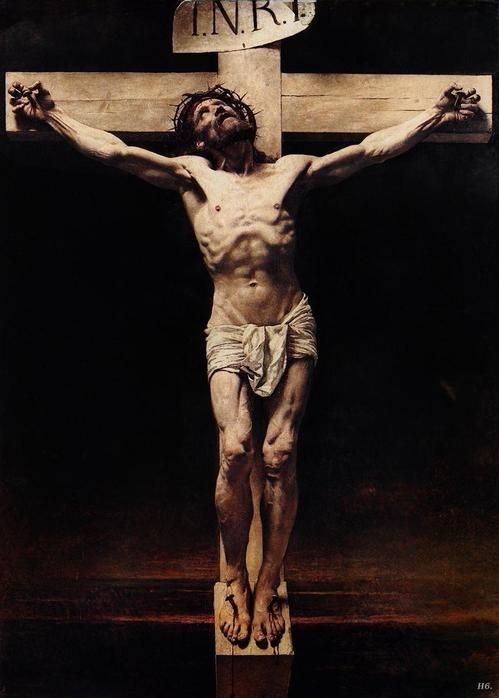
Christ does not represent all that is admired by humanity, for it is the mark of our sin that we can admire despicable things above pure goodness.
Rather, Christ is all that is admired by God; He is all that is God, yet all that God meant humanity to be, the very likeness of God our Father in the flesh.
For that reason we nailed our Brother to the cross, for His perfect love and goodness offended us.
Such is the difference between what we hold dear and what God values most. Yet knowing this, we abhor the thought of a repentance that breaks our hard hearts.
Will we remain lovers of pleasure more than lovers of God?
“He was despised and forsaken of men,
A man of sorrows and acquainted with grief;
And like one from whom men hide their face
He was despised, and we did not esteem Him.
Surely our griefs He Himself bore,
And our sorrows He carried;
Yet we ourselves esteemed Him stricken,
Smitten of God, and afflicted.”— Isaiah 53:3-4
-
New Video From “Voices in the Garden”
I recorded this 21 minute gospel message in the early hours this morning. I hope you find a blessing in it.
-
One of my recent YouTube videos: a reading with comments.
-
A Place For You
Every journey must begin from where we are, not from where we wish to be. Without a present location we have no destination.
Until we fully accept the reality of where we are in life, of who we have come to be, no matter who we are, no matter where that place is, we will always feel lost, not knowing where to begin our journey to a new or better place.
Change always begins with acceptance, accepting our past and present before we can move on.
The greater part of spiritual, emotional, and mental distress comes from a denial of reality, an unwillingness to accept things as they are. This distress is amplified, sometimes into madness, when our denial of reality includes the absence of hope for a better future.
Know too that…
“Acceptance of one’s life has nothing to do with resignation; it does not mean running away from the struggle. On the contrary, it means accepting it as it comes, with all the handicaps of heredity, of suffering, of psychological complexes and injustices.”
Paul Tournier
Acceptance of reality is the act of a responsible and reasonable mind, a mind willing to take responsibility for who we have become and where we reside in life. It is accepting that we are responsible for change as well, for choosing the path we are on.
Acceptance of reality is not fatalism, as if we have been put in our place without making any choices of our own. But it is true that we can find ourselves enslaved by others and circumstances beyond our control, forced into positions and places against our will. Yet even this place in life must be accepted as it is before it can be changed. If we do not acknowledge our predicament or enslavement we will not desire our freedom.
How then can we know our reality? What if our present position is so isolated or our distress is so great that we cannot see clearly, unable to see who we are or where we live? What if our relation to the world and to others has become so complicated that we have completely lost our ourselves in it?
The living God, our Creator and Redeemer, knows where we are, knows who we are and knows the way we should go. And he is with us through his Word to give us the guidance, the instruction, the very life that we need.
Acceptance of reality includes acceptance of God in it. It is seeing that we are not alone though we may feel alone. Acceptance of reality, of things as they are no matter how painful that may be, must include acceptance of the God who transcends our reality, even the reality of suffering and death.
As an example of how this worked out, this acceptance of reality, in the Life of Christ we read:
“Being found in appearance as a man, He humbled Himself by becoming obedient to the point of death, even death on a cross. For this reason also, God highly exalted Him, and bestowed on Him the name which is above every name, so that at the name of Jesus every knee will bow, of those who are in heaven and on earth and under the earth, and that every tongue will confess that Jesus Christ is Lord, to the glory of God the Father.”
— Philippians 2:8-11
We see in Jesus that acceptance of reality is the essence of humility. And that this humility that accepts reality, “obedient unto death”, is the path to the glorius future God has prepared for all who live in faith and obedience to his will, who take up their cross and follow him.
“But when He, the Spirit of truth, comes, He will guide you into all the truth; for He will not speak on His own initiative, but whatever He hears, He will speak; and He will disclose to you what is to come.
— John 16:13
For more:
— Psalm 119:105
— 2 Timothy 3:16-17
— Proverbs 6:22-23
— John 8:12 -
The Godless Sermon and Godless Preachers of Godless Worship
“And when I came to you, brethren, I did not come with superiority of speech or of wisdom, proclaiming to you the testimony of God. For I determined to know nothing among you except Jesus Christ, and Him crucified. I was with you in weakness and in fear and in much trembling, and my message and my preaching were not in persuasive words of wisdom, but in demonstration of the Spirit and of power, so that your faith would not rest on the wisdom of men, but on the power of God.”
1 Cor. 2.1-5
I consider any sermon godless that omits Christ and His atonement, that offers no message of forgiveness, nothing about how God will justify the ungodly and judge the wicked.
If there is no blood the sermon is no more than the offering of Cain, the laying out of produce from the field, unsanctified, unacceptable to God without the atoning blood of Christ. It is nothing more than imagined good advice or earnest moralizing. And for that it is an evil effort, deceptive, seductive, a prostitution of the pulpit, not for any “good” it includes, but for the blood it omits.
“But even if we, or an angel from heaven, should preach to you a gospel contrary to what we have preached to you, he is to be accursed! As we have said before, so I say again now, if any man is preaching to you a gospel contrary to what you received, he is to be accursed!
Gal. 1.8,9
The absence of “Christ and Him crucified” in post-modern pulpits today, as in the past, is a sure sign of the devil’s success in seducing the church with a false gospel as he wars against those who “keep the commandments of God and hold to the testimony of Jesus” (Rev. 12.17).
The false gospel is always founded on the idea that we can, through our own hard work in obedience, merit the mercies of God and earn us salvation. Though veiled in seductive language, the message of the devil and his preachers is that good advice and a strong will is all we need to stroll through the gates of paradise as others admire our shining goodness. There is no need for blood. You can justify yourselves before God by your sincerity and loving deeds.
And should, per chance, the cross be lifted up, we are increasling told it is “only” a demonstration of love, it’s only power a moral influence for change. But no penalty, was paid. No wrath of God was propitiated, no real righteousness imputed to the sinner through the substitution of Christ as the sinners payment of ransom. The plainest Scripture is denied to secure a gospel where no warning of judgment is necessary, not satisfaction for the law is required. As long as God sees you are loving, your good works of patient kindness will justify you, so the lie is told. Doing good is being good in this false story. There is no real need of Christ’s virtue to purify this corrupt channel of humanity that pollutes even our most earnest efforts.
“This is the only thing I want to find out from you: did you receive the Spirit by the works of the Law, or by hearing with faith? Are you so foolish? Having begun by the Spirit, are you now being perfected by the flesh? Did you suffer so many things in vain—if indeed it was in vain? So then, does He who provides you with the Spirit and works miracles among you, do it by the works of the Law, or by hearing with faith?”
Gal. 3.2-5
“Do this” and “Don’t do that” is what I most often hear. We just need a little tuning up and all is well. Of course, we also hear a good bit of fear mongering, of all is in crisis, and our only hope is (not Christ) but trying harder. If not that, it is the constant condemnation of never being good enough to meet the preacher’s need of change and progress for his never-ending programs. Filled pews and busy people are signs of his success and assurance of professional advancement, that is, a bigger church with more influence and prestige and benefits.
How can we believe in the Apocalyptic message that Babylon is the church in her fallen, apostate condition without also holding a light on the pastors who are skinning their sheep?
And what of the Laodicean complacency that Christ said would cause him to spew the church from his mouth? (Rev. 3.14-22) Who leads the church in this false sense of dependency in self rather than Christ? Who has led the churches of Laodicea into their spiritual pride and unrepentant spirit?
“But may it never be that I would boast, except in the cross of our Lord Jesus Christ, through which the world has been crucified to me, and I to the world.”
Gal. 6.14
Now, from a better pen….
“Many of our ministers have merely sermonized, presenting subjects in an argumentative way, and scarcely mentioning the saving power of the Redeemer. Their testimony was destitute of the saving blood of Christ. Their offering resembled the offering of Cain. He brought to the Lord the fruit of the ground, which in itself was acceptable in God’s sight. Very good indeed was the fruit; but the virtue of the offering—the blood of the slain lamb, representing the blood of Christ—was lacking. So it is with Christless sermons. By them men are not pricked to the heart; they are not led to inquire, What must I do to be saved?
Of all professing Christians, Seventh-day Adventists should be foremost in uplifting Christ before the world. The proclamation of the third angel’s message calls for the presentation of the Sabbath truth. This truth, with others included in the message, is to be proclaimed; but the great center of attraction, Christ Jesus, must not be left out. It is at the cross of Christ that mercy and truth meet together, and righteousness and peace kiss each other. The sinner must be led to look to Calvary; with the simple faith of a little child he must trust in the merits of the Saviour, accepting His righteousness, believing in His mercy.
Ellen White, Gospel Workers, p. 156
“More people than we think are longing to find the way to Christ. Those who preach the last message of mercy should bear in mind that Christ is to be exalted as the sinner’s refuge. Some ministers think that it is not necessary to preach repentance and faith; they take it for granted that their hearers are acquainted with the gospel, and that matters of a different nature must be presented in order to hold their attention. But many people are sadly ignorant in regard to the plan of salvation; they need more instruction upon this all-important subject than upon any other.
Theoretical discourses are essential, that people may see the chain of truth, link after link, uniting in a perfect whole; **but no discourse should ever be preached without presenting Christ and Him crucified as the foundation of the gospel.**”
ibid, GW 158.3
“In every discourse fervent appeals should be made to the people to forsake their sins and turn to Christ. The popular sins and indulgences of our day should be condemned, and practical godliness enforced. The minister should be deeply in earnest himself, feeling from the heart the words he utters, and unable to repress his feeling of concern for the souls of men and women for whom Christ died. Of the Master it was said, “The zeal of thine house hath eaten me up.” [John 2:17.] The same earnestness should be felt by his representatives.”
ibid, GW , 1892 edition, p. 15
““Cry loudly, do not hold back;
Raise your voice like a trumpet,
And declare to My people their transgression
And to the house of Jacob their sins.
“Yet they seek Me day by day and delight to know My ways,
As a nation that has done righteousness
And has not forsaken the ordinance of their God.
They ask Me for just decisions,
They delight in the nearness of God.
‘Why have we fasted and You do not see?
Why have we humbled ourselves and You do not notice?’
Behold, on the day of your fast you find your desire,
And drive hard all your workers.
“Behold, you fast for contention and strife and to strike with a wicked fist.
You do not fast like you do today to make your voice heard on high.
“Is it a fast like this which I choose, a day for a man to humble himself?
Is it for bowing one’s head like a reed
And for spreading out sackcloth and ashes as a bed?
Will you call this a fast, even an acceptable day to the Lord?
“Is this not the fast which I choose,
To loosen the bonds of wickedness,
To undo the bands of the yoke,
And to let the oppressed go free
And break every yoke?
“Is it not to divide your bread with the hungry
And bring the homeless poor into the house;
When you see the naked, to cover him;
And not to hide yourself from your own flesh?
“Then your light will break out like the dawn,
And your recovery will speedily spring forth;
And your righteousness will go before you;
The glory of the Lord will be your rear guard.
“Then you will call, and the Lord will answer;
You will cry, and He will say, ‘Here I am.’
If you remove the yoke from your midst,
The pointing of the finger and speaking wickedness,
And if you give yourself to the hungry
And satisfy the desire of the afflicted,
Then your light will rise in darkness
And your gloom will become like midday.
“And the Lord will continually guide you,
And satisfy your desire in scorched places,
And give strength to your bones;
And you will be like a watered garden,
And like a spring of water whose waters do not fail.
“Those from among you will rebuild the ancient ruins;
You will raise up the age-old foundations;
And you will be called the repairer of the breach,
The restorer of the streets in which to dwell.”
Isaiah 58.1-12
Home
About Me
A Christian, thinking, vlogging, and writing online. I live elsewhere as well. I follow the theology of the cross in the faith and practice of the Seventh-day Adventist Church. Formerly a pastor in Europe and America, now living semi-retired in Kentucky (U.S.), driving for the Amish and in-home carer.

