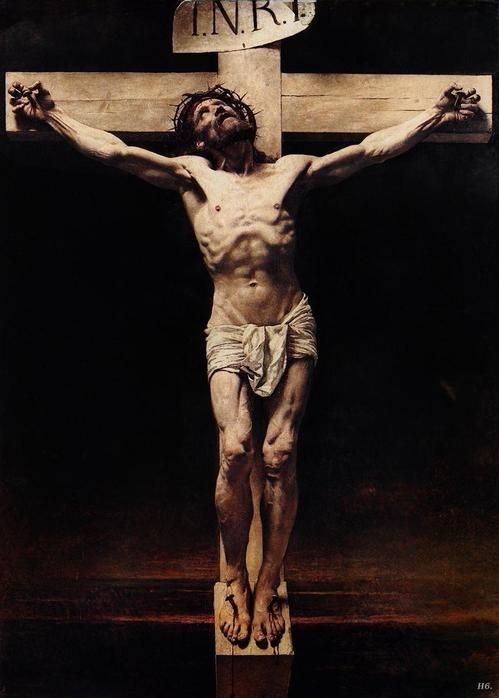
-
Easter: What does it really mean?
Why is it that the Bible does not give us a day to celebrate the resurrection of Christ? There is no command to celebrate or to set aside such a day. There is no historical precedent for it in the New Testament writings after the resurrection of Christ. You have to go beyond the New Testament era to find that.
Don’t misunderstand me. I’m not saying that we should do that, that is, think about the death and resurrection of Christ at a special time. But are we doing so In a way that hinders us from understanding it’s true meaning?
If you do a search online concerning the resurrection you will find a great number of references or books that take up the question about the historical fact of the resurrection. The great question everyone wrestles with and seems to dominate is whether or not Christ was, in fact, truly raised from the dead.
Whole books, many books, have been written as apologies of the Christian faith in defending the doctrine of his resurrection. I’m not saying this should not be. Paul takes up this idea and defends the resurrection of Christ from the dead in 1st Corinthians chapter 15. That would be a very good study this time of year.
But that in itself is not a celebration of the resurrection of Christ. It is defending the historical reality.
What I’m asking is this: How does God want us to celebrate the resurrection of Christ from the dead? Isn’t there some scripture on this? We know that he has not declared a specific day to do it or even a specific weekend or time of the year. Does he want us to celebrate the resurrection at all?
This is an important question for the Christian faith. To get the death and resurrection of Christ wrong is to get everything wrong about who God is, about what he has done in, through, and as his Son. If we are wrong about the nature and meaning of his death and resurrection we are wrong about everything else in the Christian faith.
And sometimes getting it wrong means simply putting the emphasis where it isn’t meant to be. It means a misdirection, taking away of the true object of faith and replacing it with something else that does not suffice.
What we do find in Scripture is that the resurrection of Christ is closely linked to baptism by immersion, that is, by the new believer being taken under the water and brought back out as an immersive experience of death and resurrection in union with Jesus Christ.
Do we change our teaching, even the significance of the resurrection when we take away this link, this emphasis on the union of the believer with Christ in his death and resurrection as an existential reality NOW, when we replace it with an annual remembrance of the resurrection of Jesus that is celebrated as a religious and even secular event, apart from the living witness of a new life before our very eyes?
Is it any wonder people disbelieve the truth of resurrection, the raising of the dead, when they can readily claim they have never seen it happen. Have we pointed them in the right direction?
Are they truly associating the resurrection of Christ with the new creation of life in the believer who was once dead in trespasses and sins? What are we declaring about the resurrection?
There’s a danger resurrection is seen as something that only happened then (If it ever happened at all, as some say) and that this resurrection into a new and justified life before God and others is not here and now. It becomes only something we look back on rather than something we behold in the present. Or it becomes the promise of something we will have at the last resurrection in Christ raises the dead rather than him raising those who have been dead in their trespasses and sins.
Resurrection of the body is pointless and nonsensical if there has not been a rebirth in the Spirit. You simply would have a body without life. The emphasis of Scripture on the resurrection of the dead is a passing from death in sin to a life in Christ, in the very here and now.
If we proclaim a living Christ where is he to be seen? Scripture declares he is to be seen in the believer’s life.
Therefore if anyone is in Christ, he is a new creature; the old things passed away; behold, new things have come.
— 2 Corinthians 5:17
…having been buried with Him in baptism, in which you were also raised up with Him through faith in the working of God, who raised Him from the dead.
— Colossians 2:12
“For if we have become united with Him in the likeness of His death, certainly we shall also be in the likeness of His resurrection, knowing this, that our old self was crucified with Him, in order that our body of sin might be done away with, so that we would no longer be slaves to sin; for he who has died is freed from sin.
Now if we have died with Christ, we believe that we shall also live with Him, knowing that Christ, having been raised from the dead, is never to die again; death no longer is master over Him. For the death that He died, He died to sin once for all; but the life that He lives, He lives to God. Even so consider yourselves to be dead to sin, but alive to God in Christ Jesus.
Therefore do not let sin reign in your mortal body so that you obey its lusts, and do not go on presenting the members of your body to sin as instruments of unrighteousness; but present yourselves to God as those alive from the dead, and your members as instruments of righteousness to God.
— Romans 6:5-13 -
The Dry Trees of Easter
Before the Resurrection was His humiliating death on the cross at the urging of “his own”. “Crucify, crucify”, they shouted to Pilate, yet a few wept at the cruel sight of His humiliation.
“And following Him was a large crowd of the people, and of women who were mourning and lamenting Him. But Jesus turning to them said, “Daughters of Jerusalem, stop weeping for Me, but weep for yourselves and for your children. For behold, the days are coming when they will say, ‘Blessed are the barren, and the wombs that never bore, and the breasts that never nursed.’ Then they will begin to say to the mountains, ‘Fall on us,’ and to the hills, ‘Cover us.’ For if they do these things when the tree is green, what will happen when it is dry?” Two others also, who were criminals, were being led away to be put to death with Him.”
— Luke 23:27-32
In 70 AD, Titus and his Roman army sacked Jerusalem, destroying the 2nd Temple after a five month siege. Hundreds of thousands died, most of them civilians, non-combatants. As the Roman soldiers attacked the city the insurrectionist murdered, raped, and cannibalized themselves. It was an unspeakable horror, the curse of God for defiling His Son. He answered their demand for blood.
At Jesus’ trial, when Pilte balked at sentencing Jesus to death by crucifixion, the people cries out for His death, shouting, “His blood shall be on us and on our children!”.
Pilate said to them, “Then what shall I do with Jesus who is called Christ?” They all said, “Crucify Him!” And he said, “Why, what evil has He done?” But they kept shouting all the more, saying, “Crucify Him!” When Pilate saw that he was accomplishing nothing, but rather that a riot was starting, he took water and washed his hands in front of the crowd, saying, “I am innocent of this Man’s blood; see to that yourselves.” And all the people said, “His blood shall be on us and on our children!” Then he released Barabbas for them; but after having Jesus scourged, he handed Him over to be crucified.
— Matthew 27:22-26
Not long before His greatest suffering, Jesus wept over them.
“Jerusalem, Jerusalem, who kills the prophets and stones those who are sent to her! How often I wanted to gather your children together, the way a hen gathers her chicks under her wings, and you were unwilling. Behold, your house is being left to you desolate! For I say to you, from now on you will not see Me until you say, ‘Blessed is He who comes in the name of the Lord!’”
— Matthew 23:37-39
But it would be a great mistake to count only the Jewish nation as sinners for rejecting Christ. The guilt of sin is on us all, Jew and Gentile, for all have sinned and fallen short of the glory of God.
As the apostle Paul proved,
“There is none righteous, not even one;
There is none who understands,
There is none who seeks for God;
All have turned aside, together they have become useless;
There is none who does good,
There is not even one.”
“Their throat is an open grave,
With their tongues they keep deceiving,”
“The poison of asps is under their lips”;
“Whose mouth is full of cursing and bitterness”;
“Their feet are swift to shed blood,
Destruction and misery are in their paths,
And the path of peace they have not known.”
“There is no fear of God before their eyes.”
Now we know that whatever the Law says, it speaks to those who are under the Law, so that every mouth may be closed and all the world may become accountable to God; because by the works of the Law no flesh will be justified in His sight; for through the Law comes the knowledge of sin.
— Romans 3:10-20
He is returning soon and every eye shall see him, including those who crucified him. There will be a special resurrection of those wicked so they can witness his glorious justification by God.
Behold, He is coming with the clouds, and every eye will see Him, even those who pierced Him; and all the tribes of the earth will mourn over Him. So it is to be. Amen.
— Revelation 1:7
At that time the whole world will cry out, as it did long ago, for the rocks and mountains to fall on them.
Then the kings of the earth and the great men and the commanders and the rich and the strong and every slave and free man hid themselves in the caves and among the rocks of the mountains; and they said to the mountains and to the rocks, “Fall on us and hide us from the presence of Him who sits on the throne, and from the wrath of the Lamb; for the great day of their wrath has come, and who is able to stand?”
— Revelation 6:15-17
How many of us who celebrate his death and resurrection this Easter weekend are anymore than mere religious formalist, professing of faith in him yet denying him as Lord by our disobedience?
If they’ve done this to the Tree when He was green, full of divine life, what will God do to the dry, fruitless trees?
Indeed the axe is already laid at the root of the trees; so every tree that does not bear good fruit is cut down and thrown into the fire.”
— Luke 3:9
So just as the tares are gathered up and burned with fire, so shall it be at the end of the age. The Son of Man will send forth His angels, and they will gather out of His kingdom all stumbling blocks, and those who commit lawlessness, and will throw them into the furnace of fire; in that place there will be weeping and gnashing of teeth. Then the righteous will shine forth as the sun in the kingdom of their Father. He who has ears, let him hear.
— Matthew 13:40-43
On this Easter weekend, with so much pius hypocrisy filling the world, when “…It was also given to him [the Beast] to make war with the saints and to overcome them, and authority over every tribe and people and tongue and nation was given to him. (Revelation 13:7), how will we answer the cry of conviction that comes to those who realize they have crucified the Son of God?
Now when they heard this, they were pierced to the heart, and said to Peter and the rest of the apostles, “Brethren, what shall we do?” Peter said to them, “Repent, and each of you be baptized in the name of Jesus Christ for the forgiveness of your sins; and you will receive the gift of the Holy Spirit. For the promise is for you and your children and for all who are far off, as many as the Lord our God will call to Himself.” And with many other words he solemnly testified and kept on exhorting them, saying, “Be saved from this perverse generation!”
— Acts 2:37-40
As the history of crucifying the Son of God afresh is repeated day by day, the answer for our guit and shame remains the same: “Behold the Lamb of God who takes away the sin of the world.”
He was in the world, and the world was made through Him, and the world did not know Him. He came to His own, and those who were His own did not receive Him. But as many as received Him, to them He gave the right to become children of God, even to those who believe in His name, who were born, not of blood nor of the will of the flesh nor of the will of man, but of God.
— John 1:10-13 -
What is the Word of God to us?
Jesus is the Word of God, “made flesh to dwell among us”. Only those who love the word of God while living here, the Word who is spirit and life to us, will find happiness and eternal life in His presence above.
“In the beginning was the Word, and the Word was with God, and the Word was God. He was in the beginning with God. All things came into being through Him, and apart from Him nothing came into being that has come into being. In Him was life, and the life was the Light of men. The Light shines in the darkness, and the darkness did not comprehend it…And the Word became flesh, and dwelt among us, and we saw His glory, glory as of the only begotten from the Father, full of grace and truth. ” John 1:1-5, 14
Jesus said, “Except you eat my flesh and drink my blood you have now life in you” (John 6:51-56). Then he later explained, “My words are spirit and life. The flesh profits nothing”. John 6.:63
Jesus offered Himself as the Word made flesh so that we could consume Him, be nourished by Him as the Bread of Life, be fed on His eternal life so that we might rise from the dead, from our deadness in sin and the decay of our bodies. He made this offering in His death on a cross and His resurrection from the dead. The Word of God is eternal life for those who abide in Him and He in them. “He who has the Son has life and He who does not have the Son does not have life” (1 John 5:12). Yet how many try to claim this life while ignoring the Word that give life.
Why do so many accept a nominal profession of Christ without abiding in His word? Because His Word is light and they do not want their deeds exposed.
“Your word is a lamp to my feet And a light to my path.” “
The unfolding of Your words gives light; It gives understanding to the simple.”Psalm 119.105, 130But the light is hated by the nominal Christian heart, lest our pride and hypocrisy is exposed. An appearance of goodness is preferred to the goodness that comes only through the cross.
“This is the judgment, that the Light has come into the world, and men loved the darkness rather than the Light, for their deeds were evil. 20 For everyone who does evil hates the Light, and does not come to the Light for fear that his deeds will be exposed. 21 But he who practices the truth comes to the Light, so that his deeds may be manifested as having been wrought in God.” John 3:9-21
“For the word of God is living and active and sharper than any two-edged sword, and piercing as far as the division of soul and spirit, of both joints and marrow, and able to judge the thoughts and intentions of the heart. And there is no creature hidden from His sight, but all things are open and laid bare to the eyes of Him with whom we have to do.” Hebrews 4:12,13
Many profess His name but have no love, no time for the Word of God in this dark world where their very lives depend on abiding in its light. Claiming to be wise, they have become fools, exchanging the glory of God, Christ Himself, for lifeless idols, having the form of godliness but denying its power, lovers of pleasure more than lovers of God and the righteousness He offers in Christ alone.
Time for living is the most precious gift God has given to everyone on earth. Time. How have we spent our time? Seeking the world’s pleasure or a life of righteousness in Christ? Every moment, every thought and action, is recorded in the books of heaven under an account with our name on it. How many of us have “bankrupt” registered against our names? Hours, days, and years wasted in pursuing anything and everything except Christ and His righteousness.
Hear their judgment when He comes:
“Not everyone who says to Me, ‘Lord, Lord,’ will enter the kingdom of heaven, but he who does the will of My Father who is in heaven will enter. Many will say to Me on that day, ‘Lord, Lord, did we not prophesy in Your name, and in Your name cast out demons, and in Your name perform many miracles? And then I will declare to them, ‘I never knew you; depart from Me, you who practice lawlessness.’ ~ Matthew 6:21-23
It is not the hearers of God’s Word who are saved, but the doers. (Romans 2:13). Our works, what is done and what is left undone, testifies to the reality of our faith, for faith without works is dead, abiding alone. (James 2:17). These are works of faith done in love that are missing from many in the church.
Our faith and obedience in His Word will bear witness to our love for Him. Jesus commands us to be filled with His Word and says, if you love me you will keep my commandments. He is the Word of God. “In Him is life and His life is the light of humanity”. But if sin is cherished in the heart, it grows cold in the darkness, in the absence of His abiding Word of light and life.
Is it too much to say that social media, the way many use it, is nothing but a waste compared to what God has on offer in His Word? What is the chaff to the wheat? So many distractions for entertainment and “sharing”. Chasing the next “like”. So much is nothing more than vanity pages to ask if everyone thinks we are pretty enough, likable enough, normal enough, successful, admirable, lovable, religious enough, good and righteous.
How could those hours be improved for “watching” in prayer against temptation, for filling the heart with a true knowledge of God in Christ, for “eating his flesh and drinking his blood”, without which we have no life in us? We need less talk and more prayer.
How could we spend these idle hours in helping our neighbors in need? Visiting those who will never be found on Facebook, Instagram, Twitter, Youtube, TicToc, or the like?
Does our love have skin on it, a love that can touch the untouchables, a love that can be felt and held and seen with our eyes? That is who Jesus came to be for us. Love with skin on it. Who are we to our neighbors?
Look at all the hours wasted on what was once called “window shopping”, browsing the web for “deals”, for more stuff. Should we talk about addictions to fashion and food, to celebrity gossip, politics, sports, and a hundred other diversions and idolatries that keep us in the lukewarm condition of the Laodiceans? One foot in the church, one foot in the world means to be outside the kingdom of God in spirit.
Jesus has a Word to the lukewarm, a word of rebuke and warning and entreaty, a word of love and pleading.
“The Amen, the faithful and true Witness, the Beginning of the creation of God, says this:
‘I know your deeds, that you are neither cold nor hot; I wish that you were cold or hot. So because you are lukewarm, and neither hot nor cold, I will spit you out of My mouth. Because you say, “I am rich, and have become wealthy, and have need of nothing,” and you do not know that you are wretched and miserable and poor and blind and naked,
I advise you to buy from Me gold refined by fire so that you may become rich, and white garments so that you may clothe yourself, and that the shame of your nakedness will not be revealed; and eye salve to anoint your eyes so that you may see.
Those whom I love, I reprove and discipline; therefore be zealous and repent.
Behold, I stand at the door and knock; if anyone hears My voice and opens the door, I will come in to him and will dine with him, and he with Me.
He who overcomes, I will grant to him to sit down with Me on My throne, as I also overcame and sat down with My Father on His throne.
He who has an ear, let him hear what the Spirit says to the churches.”
~Revelation 3.14-22
The “gold tried in the fire” is faith, a faith in the righteousness of Christ, faith in the “word of God and the testimony of Jesus”.
“…so that the proof of your faith, being more precious than gold which is perishable, even though tested by fire, may be found to result in praise and glory and honor at the revelation of Jesus Christ;” 1 Peter 1.7
The white garment to cover the shame of our nakedness, as sinners in the eyes of a holy God, is the righteousness of Christ offered to us freely by His grace. See Zechariah 3:3-5; Matthew 22:11-14.
“He who overcomes will thus be clothed in white garments; and I will not erase his name from the book of life, and I will confess his name before My Father and before His angels.” Rev. 3:5
“Behold, I am coming like a thief. Blessed is the one who stays awake and keeps his clothes, so that he will not walk about naked and men will not see his shame.” Rev. 16:15
The eye salve needed by those too blind to see their true condition is the Holy Spirit, He who is the light of the Word to our souls.
“And He [the Holy Spirit], when He comes, will convict the world concerning sin and righteousness and judgment; concerning sin, because they do not believe in Me; 10 and concerning righteousness, because I go to the Father and you no longer see Me; and concerning judgment, because the ruler of this world has been judged.”
John 16:8-10“…a spirit of wisdom and of revelation in the knowledge of Him. I pray that the eyes of your heart may be enlightened, so that you may know what is the hope of His calling, what are the riches of the glory of His inheritance in the saints” Eph. 1:17–18.
“Open my eyes, that I may behold wonderous things out of your law”. Psalm 119:18
Jesus says these are the true riches we must “buy”. But what do we have to give in exchange? We give Him ourselves, all of that we are and hope to be. Just as we are with our sin and shame. In repentance through faith He in turn gives us His perfect righteousness, freeing us from the condemnation we so justly deserve. We are to give all and take all in this reconciling act of God in Christ. The exchange is made at the foot of His cross.
Come while the call can still be heard. “Behold, I stand at the door and knock; if anyone hears My voice and opens the door, I will come in to him and will dine with him, and he with Me. He who overcomes, I will grant to him to sit down with Me on My throne, as I also overcame and sat down with My Father on His throne.”
“Therefore everyone who hears these words of Mine and acts on them, may be compared to a wise man who built his house on the rock. And the rain fell, and the floods came, and the winds blew and slammed against that house; and yet it did not fall, for it had been founded on the rock. Everyone who hears these words of Mine and does not act on them, will be like a foolish man who built his house on the sand. The rain fell, and the floods came, and the winds blew and slammed against that house; and it fell—and great was its fall.” Matthew 7:24-27
-
Repentance
Here below are two passages of scripture for our meditation and instruction in the faith of Christ.
I bring them to you after the Lord brought them to me this morning, to meet my own need for a deeper repentance, that I might see my sin as He sees it and that He may yet give me a repentance that does not need a repentance of its own.
The first passage, from The Book of Revelation, describes the condition of the church in the last days, a condition of spiritual self-satisfaction and self-righteousness. She is blind to her true condition and in great danger of eternal separation from the Lord.
Yet God, in His mercy, in His great love for Her, reveals her need and shows her just what she needs to do to be restored to faithfulness and communion with Him. He calls her to repentance with the promise of restoration, if she will.
The second passage, from the Psalms, is a powerful description of what such a repentance is like when the spirit of the Lord brings home to us the “shame of our nakedness”, when He exposes the shame of our sinfulness, the shame we have so desperately tried to hide from Him and ourselves.
If we see our sin, our lawlessness, in it’s true light, as sin against God, sin that would crucify Christ afresh, we will pray for repentance in the spirit of this Psalm. We will be able to identify with the Psalmist anguish over his sin. And we will cry out to God for forgiveness.
God has given us the clearest warnings as He tries to awaken us to our need.
“He who overcomes shall inherit all things, and I will be his God and he shall be My son.
But the cowardly, unbelieving, abominable, murderers, sexually immoral, sorcerers, idolaters, and all liars shall have their part in the lake which burns with fire and brimstone, which is the second death….
But there shall by no means enter it anything that defiles, or causes an abomination or a lie, but only those who are written in the Lamb’s Book of Life.” (Rev. 21:7-8,27 NKJV)
As Jesus says to the Laodiceans, “Those whom I love, I reprove and discipline, so be zealous and repent. Behold, I stand at the door and knock. If anyone hears my voice and opens the door, I will come in to him and eat with him, and he with me.”
Do we have ears to hear what the spirit says to the church, to us in these last days?
Will we find repentance before it’s too late, before the final words of judgment?
“He who is unjust, let him be unjust still; he who is filthy, let him be filthy still; he who is righteous, let him be righteous still; he who is holy, let him be holy still.” (Revelation 22:11 NKJV)
Those who do overcome find their victory in the blood of the Lamb, when they come to a place of complete and daily dependence on the righteousness of Christ (Romans 3:21-31). Only the robe of his righteousness can cover “the shame of our nakedness”; only the indwelling presence of His Holy Spirit can shield us from the powerful temptations of sin.
Those who were sealed in loyalty to God in the tribulation of the last days (Rev. 7:1-3; 14:1-5) are sealed by His Spirit (Eph. 1:13; 4:30; 2 Tim. 2:19) through faith in the blood of Jesus Christ, the Lamb of God who takes away the sin of the world.”
“And they overcame him by the blood of the Lamb and by the word of their testimony, and they did not love their lives to the death.” (Rev.12:11 NKJV)
“And the Spirit and the bride say, “Come!” And let him who hears say, “Come!” And let him who thirsts come. Whoever desires, let him take the water of life freely.”
(Rev. 22:17 NKJV)
________________________________
To the Church in Laodicea
14 “And to the angel of the church in Laodicea write: ‘The words of the Amen, the faithful and true witness, the beginning of God’s creation.
15 “‘I know your works: you are neither cold nor hot. Would that you were either cold or hot! 16 So, because you are lukewarm, and neither hot nor cold, I will spit you out of my mouth. 17 For you say, I am rich, I have prospered, and I need nothing, not realizing that you are wretched, pitiable, poor, blind, and naked. 18 I counsel you to buy from me gold refined by fire, so that you may be rich, and white garments so that you may clothe yourself and the shame of your nakedness may not be seen, and salve to anoint your eyes, so that you may see.
19 Those whom I love, I reprove and discipline, so be zealous and repent. 20 Behold, I stand at the door and knock. If anyone hears my voice and opens the door, I will come in to him and eat with him, and he with me.
21 The one who conquers, I will grant him to sit with me on my throne, as I also conquered and sat down with my Father on his throne.
22 He who has an ear, let him hear what the Spirit says to the churches.’”
— Rev. 3:14–22 ESV
Psalm 38
A PSALM OF DAVID, FOR THE MEMORIAL OFFERING.
1 O LORD, rebuke me not in your anger, nor discipline me in your wrath!
2 For your arrows have sunk into me, and your hand has come down on me.
3 There is no soundness in my flesh because of your indignation; there is no health in my bones because of my sin.
4 For my iniquities have gone over my head; like a heavy burden, they are too heavy for me.
5 My wounds stink and fester because of my foolishness,
6 I am utterly bowed down and prostrate; all the day I go about mourning.
7 For my sides are filled with burning, and there is no soundness in my flesh.
8 I am feeble and crushed; I groan because of the tumult of my heart.
9 O Lord, all my longing is before you; my sighing is not hidden from you.
10 My heart throbs; my strength fails me, and the light of my eyes—it also has gone from me.
11 My friends and companions stand aloof from my plague, and my nearest kin stand far off.
12 Those who seek my life lay their snares; those who seek my hurt speak of ruin and meditate treachery all day long.
13 But I am like a deaf man; I do not hear, like a mute man who does not open his mouth.
14 I have become like a man who does not hear, and in whose mouth are no rebukes.
15 But for you, O LORD, do I wait; it is you, O Lord my God, who will answer.
16 For I said, “Only let them not rejoice over me, who boast against me when my foot slips!”
17 For I am ready to fall, and my pain is ever before me.
18 I confess my iniquity; I am sorry for my sin.
19 But my foes are vigorous, they are mighty, and many are those who hate me wrongfully. 20 Those who render me evil for good accuse me because I follow after good.
21 Do not forsake me, O LORD! O my God, be not far from me!
22 Make haste to help me, O Lord, my salvation!
– Psalm 38, ESVHere is a brief list of other Psalms of repentance if you want to continue with this meditation: Psalms 6, 32, 51, 102, 130, 143.
I have them in a playlist on my Dwell Bible app. I highly recommend the app for listening to scripture; it also allows you to read along if you like.
-
Perfection: What did Jesus mean when He commanded us to be “perfect”?

We know from the context of this passage that Jesus was speaking of the perfection of love in the character, such a love that embraces even one’s enemies, just as God does with us. Such is what it means to be like our heavenly Father, who so loved the world that he gave his only Son that whoever believes in him should not perish but have eternal life. (John 3:16)
“You have heard that it was said, ‘You shall love your neighbor and hate your enemy.’ But I say to you, love your enemies and pray for those who persecute you, so that you may be sons of your Father who is in heaven; for He causes His sun to rise on the evil and the good, and sends rain on the righteous and the unrighteous. For if you love those who love you, what reward do you have? Do not even the tax collectors do the same? If you greet only your brothers, what more are you doing than others? Do not even the Gentiles do the same?
— Matthew 5:43-47
The nature and manifestation of this love is self-sacrifice even for one’s enemies.
To love someone means to always will, to always desire and choose, what is good for them, even if they are our enemies. It is not simply about feeling good or bad towards a person. Love means to will the good of the other even if it requires self-sacrifice of our own needs and desires. We love them regardless of how we feel about them. We learned this from the Cross of Christ.
“But God demonstrates His own love toward us, in that while we were yet sinners, Christ died for us.”
— Romans 5:8
The emphasis is on perfection of a loving character, not perfection of every aspect of sinful human nature. By this we are not talking about sinful human behavior, for which there is no excuse. We are talking about the corruption of human nature which will not be changed until we meet Jesus, either at our resurrection or if we live to see him come. (1 Cor. 15:50-53; 1 Thess. 4:13-18).
We may have a perfect Christ-like character through the indwelling of the Holy Spirit, even though we retain the inherent sinfulness of our nature for what the apostle Paul calls, “the flesh”.
“For I know that nothing good dwells in me, that is, in my flesh; for the willing is present in me, but the doing of the good is not.”
— Romans 7:18
However, while having sinful flesh we are not to live out the dictates of this sinful nature. Rather, we are to receive the indwelling Christ and to live by His spirit, by the principles of his character in the power of His Spirit.
“…so that the requirement of the Law might be fulfilled in us, who do not walk according to the flesh but according to the Spirit. For those who are according to the flesh set their minds on the things of the flesh, but those who are according to the Spirit, the things of the Spirit.”
— Romans 8:4-5
Love is the fulfilling of the law.
For the whole Law is fulfilled in one word, in the statement, “You shall love your neighbor as yourself.”
— Galatians 5:14
Character perfection, in obeying the commands of God’s law of love, is a goal only achievable through the righteousness of Christ imputed to us and the indwelling of his Spirit imparted to us. It is living in complete and consistent dependence upon him through faith in who he is and what he does for us.
Ellen White explains it this way
Be ye therefore perfect, even as your Father which is in heaven is perfect. Matthew 5:48. { TMK 130.1}
“Christ presents before us the highest perfection of Christian character, which throughout our lifetime we should aim to reach…. Concerning this perfection Paul writes: “Not as though I had already attained, either were already perfect: but I follow after…. I press toward the mark for the prize of the high calling of God in Christ Jesus” ( Philippians 3:12-15)….
How can we reach the perfection specified by our Lord and Saviour Jesus Christ—our Great Teacher? Can we meet His requirement and attain to so lofty a standard? We can, else Christ would not have enjoined us to do so. He is our righteousness. In His humanity He has gone before us and wrought out for us perfection of character. We are to have the faith in Him that works by love and purifies the soul. Perfection of character is based upon that which Christ is to us. If we have constant dependence on the merits of our Saviour, and walk in His footsteps, we shall be like Him, pure and undefiled.
Our Saviour does not require impossibilities of any soul. He expects nothing of His disciples that He is not willing to give them grace and strength to perform. He would not call upon them to be perfect if He had not at His command every perfection of grace to bestow on the ones upon whom He would confer so high and holy a privilege. He has assured us that He is more willing to give the Holy Spirit to them that ask Him than parents are to give good gifts to their children.
Our work is to strive to attain in our sphere of action the perfection that Christ in His life on the earth attained in every phase of character. He is our example. In all things we are to strive to honor God in character. In falling day by day so far short of the divine requirements, we are endangering our soul’s salvation. We need to understand and appreciate the privilege with which Christ invests us, and to show our determination to reach the highest standard. We are to be wholly dependent on the power that He has promised to give us.
Ellen White, TMK, P. 130 -
Coping and Hoping
Recorded this Thursday morning for my channel, “Voices In The Garden”.
-
Crucified With Christ: What does it mean?
“I have been crucified with Christ; it is no longer I who live, but Christ lives in me; and the life which I now live in the flesh I live by faith in the Son of God, who loved me and gave Himself for me.” ~ Galatians 2.20 NKJV
“But God forbid that I should boast except in the cross of our Lord Jesus Christ, by whom the world has been crucified to me, and I to the world.” ~ Galatians 6.14 NKJV
We so often stray from abiding with him there, at the cross. Paul said, “I die daily” (I Cor. 15.31). Only when we are united with him in a death (to self) like his can we be raised with him in new life. Jesus’ constant prayer throughout His life was, “Father, not my will, but your will be done”. Nevermore true was this secret prayer of his heart than when, after uttering these very words in Gethsemane, He hung suspended from the earth, nailed to a cross as a common criminal.
How do we join Him there? All by faith through his grace. Beholding, we become changed. (2 Cor. 3.18). Only Christ can do this for us. We cannot crucify ourselves in the spiritual sense anymore than we can in the literal. One hand would always be free. Death with him is by faith when we fully surrender to the truth that only his blood can atone for our sin and shame. Do we believe in him? Faith alone decides the question on our part. Grace for forgiveness to settle our debt and the gift of His Spirit in us is His part.
“No outward observances can take the place of simple faith and entire renunciation of self. But no man can empty himself of self. We can only consent for Christ to accomplish the work. Then the language of the soul will be, Lord, take my heart; for I cannot give it. It is Thy property. Keep it pure, for I cannot keep it for Thee. Save me in spite of myself, my weak, unchristlike self. Mold me, fashion me, raise me into a pure and holy atmosphere, where the rich current of Thy love can flow through my soul.” ~ Christ’s Object Lessons, 159
This is personal work in prayer with him. No one else can do it for us. It is not working ourselves up or down with emotions, trying to evoke a feeling for him. It comes in communion with Him by an act of his grace. There is a measure of mystery to the Spirit’s work on the heart (John 3.8). Exactly how we are born again, born from above, cannot be fully explained. But we know it comes when we want this above all else. We want him, to be with him and to be like him. Nothing else will do. Nothing else will satisfy. Oneness with him in his death to sin is our greatest desire. He will make it so. You may say that you still do not know the way. But Jesus declares, “I am the way, the truth, and the life. No one comes to the Father except by me”. We do not even repent before coming to Jesus. We come to him and he freely gives us repentance.
“Him God has exalted to His right hand to be Prince and Savior, to give repentance to Israel and forgiveness of sins.” ~ Acts 5.31
We come just as we are, knowing we are sinful and undone, yet not knowing ourselves as he does. We come to him in our helplessness, in our brokenness.
“When we feel our heart need, when we long after the quickening influence of the Holy Spirit, Christ draws nigh to us. Self is crucified. Christ lives in us, and the power of the Spirit attends our efforts. Then the souI is refined and elevated. Light from the heavenly sanctuary shines upon us, and we are enabled to exert an influence which is a savour of life unto life. By a union with Christ, by living faith, we are privileged to enjoy the efficacy of His mediation. We are crucified with Christ, buried with Christ, risen with Christ, to walk in newness of life.” Ellen White, “The Present Truth” PRT Aug. 31, 1889 (UK)
“For thus says the High and Lofty One Who inhabits eternity, whose name is Holy: “I dwell in the high and holy place, With him who has a contrite and humble spirit, To revive the spirit of the humble, And to revive the heart of the contrite ones.”
(Isaiah 57.15) NKJV“For if we have been united together in the likeness of His death, certainly we also shall be in the likeness of His resurrection, knowing this, that our old man was crucified with Him, that the body of sin might be done away with, that we should no longer be slaves of sin.” ~ Romans 6.5,6 NKJV
Dietrich Bonhoeffer is famous for the quote, “When Christ calls a man He bids him come and die”. Jesus put it this way, “If anyone desires to come after Me, let him deny himself, and take up his cross daily, and follow Me. For whoever desires to save his life will lose it, but whoever loses his life for My sake will save it.” (Luke 9.23 NKJV).
All of this truth, the death and resurrection of the self with Christ, is hidden in the compassionate call Jesus makes to all who are laboring under the crushing weight of sin and despair.
“Come to Me, all you who labor and are heavy laden, and I will give you rest. Take My yoke upon you and learn from Me, for I am gentle and lowly in heart, and you will find rest for your souls. For My yoke is easy and My burden is light.” (Matthew 11.28-30).
And when we surrender ourselves to His care and keeping, when we know the free and full forgiveness of our sins through His blood, through His death as our substitute and surety, what is this yoke He places on our shoulders?
The yoke is an instrument of service, one that binds us to Christ as we move forward in love for others just as He has done for us. The yoke is the law of God’s love, what we once defied, but not embrace through His grace. Christ for us and Christ in us is the righteousness of God that brings us to the obedience of faith (Romans 1.5).
Ellen White describes it this way.
“The yoke is placed upon the oxen to aid them in drawing the load, to lighten the burden. So with the yoke of Christ. When our will is swallowed up in the will of God, and we use His gifts to bless others, we shall find life’s burden light. He who walks in the way of God’s commandments is walking in company with Christ, and in His love the heart is at rest. When Moses prayed, “Show me now Thy way, that I may know Thee,” the Lord answered him, “My presence shall go with thee, and I will give thee rest.” And through the prophets the message was given, “Thus saith the Lord, Stand ye in the ways, and see, and ask for the old paths, where is the good way, and walk therein, and ye shall find rest for your souls.” Exodus 33:13, 14; Jeremiah 6:16. And He says, “O that thou hadst hearkened to My commandments! then had thy peace been as a river, and thy righteousness as the waves of the sea.” Isaiah 48:18.” ~ Desire of Ages, p. 331
So Paul can say, “Owe no one anything except to love one another, for he who loves another has fulfilled the law.” (Romans 13.8 NKJV)
And again,
“Bear one another’s burdens, and so fulfill the law of Christ.” (Galatians 6.2 NKJV)
In the last few hours Jesus had with His disciples before His suffering, humiliation, and death at the hands of “his own”, He taught them this same truth. How essential it must be for true discipleship with the Master.
““If you love Me, keep My commandments. And I will pray the Father, and He will give you another Helper, that He may abide with you forever—the Spirit of truth, whom the world cannot receive, because it neither sees Him nor knows Him; but you know Him, for He dwells with you and will be in you. I will not leave you orphans; I will come to you.” (John 14.15-18 NKJV)
We come to Jesus just as we are in our sin, violators and abusers of His will, of HIs law of love. Our enmity is so great that we can no more change ourselves to obedience than a leopard can change its spots. We have no power to bring something clean out of an unclean thing. But in surrendering the will to Him (He will not force us), we are washed from our sins and given His very self, by His Spirit, to dwell in us. The obedience we once found impossible becomes our bread of life. Our thoughts, emotions, feelings, and actions are one in Spirit with His. We long to do His will, bear His image, please Him in everything. Love for others, His love in us, is revealed in self-sacrificing ministry as we go “outside the gate”, as sheep among wolves, to bear the cross of Christ to others.
Each new day brings challenges, temptations, trials to overcome. Our treasure is in “jars of clay” (2 Corinthians 4.7). His grace reveals aspects of our character, hard habits and dispositions, that must change for love to grow and bear the full fruit of His character. It is a process. It means a daily dying to self, so He said. It means taking up the cross daily to follow Him, counting others more deserving than ourselves. It is the ministry and way of the cross that alone can bring the life of God’s love to starving souls. The Word of Life we offer, freely as it was freely given to us, is the Word of the Cross.
The servant is not above their Master. And the servant follows the Master. Where He is there they are. His life becomes the servants life, the life of Him who said, “For even the Son of Man did not come to be served, but to serve, and to give His life a ransom for many.” (Mark 10.45)
We’ll close with this sublime thought from the apostle Paul, who lifted up Christ as crucified for us, as both our salvation and our example. Here is the essence of what it means for the first to be last and the last to be first in the revelation of God’s glory, in “Christ and Him crucified”.
“Therefore if there is any consolation in Christ, if any comfort of love, if any fellowship of the Spirit, if any affection and mercy, fulfill my joy by being like-minded, having the same love, being of one accord, of one mind. Let nothing be done through selfish ambition or conceit, but in lowliness of mind let each esteem others better than himself. Let each of you look out not only for his own interests, but also for the interests of others.
Let this mind be in you which was also in Christ Jesus, who, being in the form of God, did not consider it robbery to be equal with God, but made Himself of no reputation, taking the form of a bondservant, and coming in the likeness of men. And being found in appearance as a man, He humbled Himself and became obedient to the point of death, even the death of the cross. Therefore God also has highly exalted Him and given Him the name which is above every name, that at the name of Jesus every knee should bow, of those in heaven, and of those on earth, and of those under the earth, and that every tongue should confess that Jesus Christ is Lord, to the glory of God the Father.” (Philippians 2.1-11 NKJV)
-
Behold the Man!
“Jesus then came out, wearing the crown of thorns and the purple robe. Pilate said to them, “Behold, the Man!”
— John 19:5I’ll offer a selected passage below, from a church paper of 1899, as a devotional reading on the benefits of Christ’s humiliation and suffering for our redemption.
I have found in my own life that if the cross of Christ will not move me toward Him in full surrender of my will to His, nothing else can. It is by holding Him that I am changed. “But we all, with unveiled face, beholding as in a mirror the glory of the Lord, are being transformed into the same image from glory to glory, just as from the Lord, the Spirit.” (2 Corinthians 3:18)
And so, I agree with Dietrich Bonhoeffer who said:
“The earthly form of Christ is the form that died on the cross. The image of God is the image of Christ crucified. It is to this image that the life of the disciples must be conformed; in other words, they must be conformed to his death (Phil 3.10, Rom 6.4) The Christian life is a life of crucifixion (Gal 2.19) In baptism the form of Christ’s death is impressed upon his own. They are dead to the flesh and to sin, they are dead to the world, and the world is dead to them (Gal 6.14). Anybody living in the strength of Christ’s baptism lives in the strength of Christ’s death.” (Emphasis mine) – The Cost of Discipleship
As Scripture attests:
“Therefore we have been buried with Him through baptism into death, so that as Christ was raised from the dead through the glory of the Father, so we too might walk in newness of life. For if we have become united with Him in the likeness of His death, certainly we shall also be in the likeness of His resurrection, knowing this, that our old self was crucified with Him, in order that our body of sin might be done away with, so that we would no longer be slaves to sin; for he who has died is freed from sin.”
— Romans 6:4-7With that preamble I’ll offer this passage by Ellen White on the humiliation and suffering of Christ (1899)
“This is the mystery of godliness,—that he who was equal with the Father should clothe his divinity with humanity, and laying aside all the glory of his office, descend step after step in the path of humiliation, enduring severe and still more severe abasement. Sinless and undefiled, he stood in the judgment-hall to be tried, to have his case investigated and pronounced upon, by the very nation he had delivered from slavery. The Lord of glory was rejected and condemned, yea, spit upon. With contempt for what they regarded as his pretentious claims, men smote him in the face. These men will one day call upon the rocks and mountains to fall upon them, and hide them from the wrath of the Lamb.
Pilate pronounced Christ innocent, declaring that he found no fault in him. Yet to please the Jews, he commanded him to be beaten, and then delivered him up to suffer the cruel death of crucifixion. The Majesty of heaven was led as a lamb to the slaughter, and amid scoffs and jeers, ridicule and false accusation, he was nailed to the cross. The crowd, in whose hearts humanity seemed to be dead, sought to aggravate his sufferings by their revilings. But as a sheep before his shearers is dumb, he opened not his mouth. He was giving his life for the life of the world, that all who believed in him might gain immortality.
Sweat-drops of agony stand upon the Saviour’s brow, while from his murderers are heard the words, “If thou be the Son of God, come down from the cross.” He is about to speak. What will he say?—From his pale, quivering lips come the words, “Father, forgive them; for they know not what they do.”
What an exhibition of divine love! Thus Christ proclaimed the good news of pardon, even to his murderers. On the cross he revealed the love of the unknown God. There is mercy for all. The most hardened sinner, if he repents, will be forgiven.
“Behold the Lamb of God, which taketh away the sin of the world.” Why, then, do those professing to believe in him show a hardness of heart, a lack of pity and love, which crucifies him afresh, and puts him to open shame?
Had the people known God, they would not have thought they were doing him service by persecuting and putting to death the prophets. But they forgot their Creator; and waxing bold in their supposed superiority, they put to death him who alone was able to give them life.
Christ’s heart was pierced by a far sharper pain than that caused by the nails driven into his hands and feet. He was bearing the sins of the whole world, enduring our punishment,—the wrath of God against transgression. His trial involved the fierce temptation of thinking that he was forsaken by God. His soul was tortured by the pressure of great darkness, lest he should swerve from his uprightness during the terrible ordeal. Unless there is a possibility of yielding, temptation is no temptation. Temptation is resisted when man is powerfully influenced to do a wrong action; and, knowing that he can do it, resists, by faith, with a firm hold upon divine power. This was the ordeal through which Christ passed. He could not have been tempted in all points as man is tempted, had there been no possibility of his failing. He was a free agent, placed on probation, as was Adam, and as is every man. In his closing hours, while hanging on the cross, he experienced to the fullest extent what man must experience when striving against sin. He realized how bad a man may become by yielding to sin. He realized the terrible consequence of the transgression of God’s law; for the iniquity of the whole world was upon him.
Reason, lost in an unfathomable depth of wonder and amazement, would question the truthfulness of such a history; but faith accepts the inspired record. It is true, and it would be blasphemy to attempt a denial. By giving his only begotten Son to die on the cross, God has shown us the estimate he places on the human soul. All that the world admires, all that it calls precious, sinks into insignificance when placed in the balance with one soul; for a priceless ransom has been paid for that soul. All heaven was given in one gift.
Christ is the representative of God to man, and the representative of man to God. He came to this world as man’s substitute and surety, and he is fully able to save all who repent and return to their allegiance. Because of his righteousness, he is able to place man on vantage-ground. Christ our Passover has been sacrificed for us. He gave his precious, sinless life to save guilty human beings from eternal ruin, that through faith in him they might stand guiltless before the throne of God. What return have we made for his great sacrifice?”
Ellen White — From a church paper, “The Youth’s Instructor”, July 20, 1899, par. 4 – par. 12
-
The Big Truth About Little Things
“He who is faithful in a very little thing is faithful also in much; and he who is unrighteous in a very little thing is unrighteous also in much.
— Luke 16:10I came across the following passage during my devotional time today. It is especially meaningful to me because it takes me into repentance. So many of the problems I have had in life have been down to the neglect of “little things”, through long repetition, laying the foundation of poor habits that led to poor character.
As I meditate on these things now I am painfully conscious of so much in my life that needs change, change that comes through attention to the small things, the mundane duties, having things in order, being consistent and conscientious in the smallest matters of life.
The passage will highlight more of what this means.
To be like jesus takes in far more than we imagine, with consequences greater than we can conceive.
First, we will read a portion of the chapter describing Jesus’ own habits of care and thoughtfulness, then moving further down, for specific applications in our own lives.
“Christ in His life on earth taught the lesson of careful attention to the little things. The great work of redemption weighed continually upon His soul. As He was teaching and healing, all the energies of mind and body were taxed to the utmost; yet He noticed the most simple things in life and in nature. His most instructive lessons were those in which by the simple things of nature He illustrated the great truths of the kingdom of God. He did not overlook the necessities of the humblest of His servants. His ear heard every cry of need. He was awake to the touch of the afflicted woman in the crowd; the very slightest touch of faith brought a response. When He raised from the dead the daughter of Jairus, He reminded her parents that she must have something to eat. When by His own mighty power He rose from the tomb, He did not disdain to fold and put carefully in the proper place the graveclothes in which He had been laid away….
Great truths must be brought into little things. Practical religion is to be carried into the lowly duties of daily life. The greatest qualification for any man is to obey implicitly the word of the Lord.
Because they are not connected with some directly religious work, many feel that their lives are useless; that they are doing nothing for the advancement of God’s kingdom. But this is a mistake. If their work is that which someone must do, they should not accuse themselves of uselessness in the great household of God. The humblest duties are not to be ignored. Any honest work is a blessing, and faithfulness in it may prove a training for higher trusts.
However lowly, any work done for God with a full surrender of self is as acceptable to Him as the highest service. No offering is small that is given with true-heartedness and gladness of soul.
Wherever we may be, Christ bids us take up the duty that presents itself. If this is in the home, take hold willingly and earnestly to make home a pleasant place. If you are a mother, train your children for Christ. This is as verily a work for God as is that of the minister in the pulpit. If your duty is in the kitchen, seek to be a perfect cook. Prepare food that will be healthful, nourishing, and appetizing. And as you employ the best ingredients in preparing food remember that you are to give your mind the best thoughts. If it is your work to till the soil or to engage in any other trade or occupation, make a success of the present duty. Put your mind on what you are doing. In all your work represent Christ. Do as He would do in your place.
However small your talent, God has a place for it. That one talent, wisely used, will accomplish its appointed work. By faithfulness in little duties, we are to work on the plan of addition, and God will work for us on the plan of multiplication. These littles will become the most precious influences in His work.
Let a living faith run like threads of gold through the performance of even the smallest duties. Then all the daily work will promote Christian growth. There will be a continual looking unto Jesus. Love for Him will give vital force to everything that is undertaken. Thus through the right use of our talents, we may link ourselves by a golden chain to the higher world. This is true sanctification; for sanctification consists in the cheerful performance of daily duties in perfect obedience to the will of God.
But many Christians are waiting for some great work to be brought to them. Because they cannot find a place large enough to satisfy their ambition, they fail to perform faithfully the common duties of life. These seem to them uninteresting. Day by day they let slip opportunities for showing their faithfulness to God. While they are waiting for some great work, life passes away, its purposes unfulfilled, its work unaccomplished.’”
Ellen White, Christ’s Object Lessons, 359 – 360 -
Who is the Holy Spirit?
This is a follow-up video to my previous one on the #AsburyRevival
Home
About Me
A Christian, thinking, vlogging, and writing online. I live elsewhere as well. I follow the theology of the cross in the faith and practice of the Seventh-day Adventist Church. Formerly a pastor in Europe and America, now living semi-retired in Kentucky (U.S.), driving for the Amish and in-home carer.
 Crucified Hearts